Tablecloths are essential textiles that define dining surfaces, protect underlying table finishes, and enhance room aesthetics. They come in a range of fabrics, weights, and weaves designed to balance durability with texture. For educational purposes, understanding material choices—cotton, linen, or blends—helps select appropriate care routines and use cases in homes and hospitality settings.
Common features to assess include thread count or weave density, hem finish, and colorfastness. Durable tablecloths often employ tight weaves and reinforced edges to withstand frequent washing and daily use. Light-duty options prioritize wrinkle resistance, while heavy-duty fabrics offer spill resistance and better drape for formal table settings.
Functional benefits vary by fabric type: cotton provides softness and breathability; linen offers natural stain resistance and a relaxed drape; blends can balance softness with durability. For high-traffic surfaces, consider performance finishes such as stain repellents or wrinkle management, ensuring the tablecloth maintains a neat appearance between cleans.
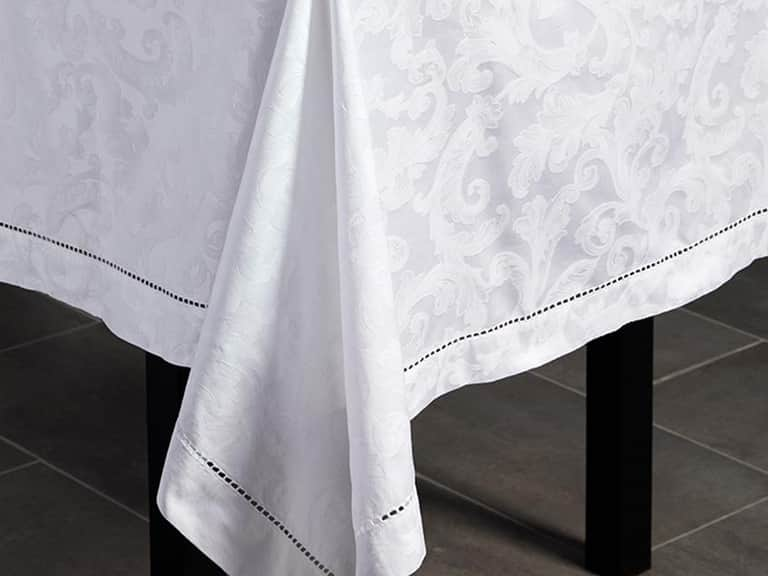
In the Pondicherry Tablecloth, woven textures and detailed finishes illustrate how design language influences usability. This line emphasizes clean lines and versatile colorways suitable for diverse tabletop arrangements. When selecting, note size compatibility with table dimensions, ease of ironing, and compatibility with placemats or runners for cohesive presentation.
Meta keywords such as bedding, pillows, sheets, bath, and bath towels reflect a broader linens ecosystem where table textiles complement fabric ensembles. While focusing on tablecloths, it is helpful to consider care labels, washing temperatures, and drying guidelines to preserve fiber integrity and color, ensuring long-term utility across home textiles and furnishings.
 Table

